Cooling & communities
Cool the compute. Protect the community.
Conservenergi’s approach connects data-center cooling, water reclamation and heat recovery—with the surrounding community in mind.
AquaFlow Insights · 2 min read
Follow the heat beyond the server
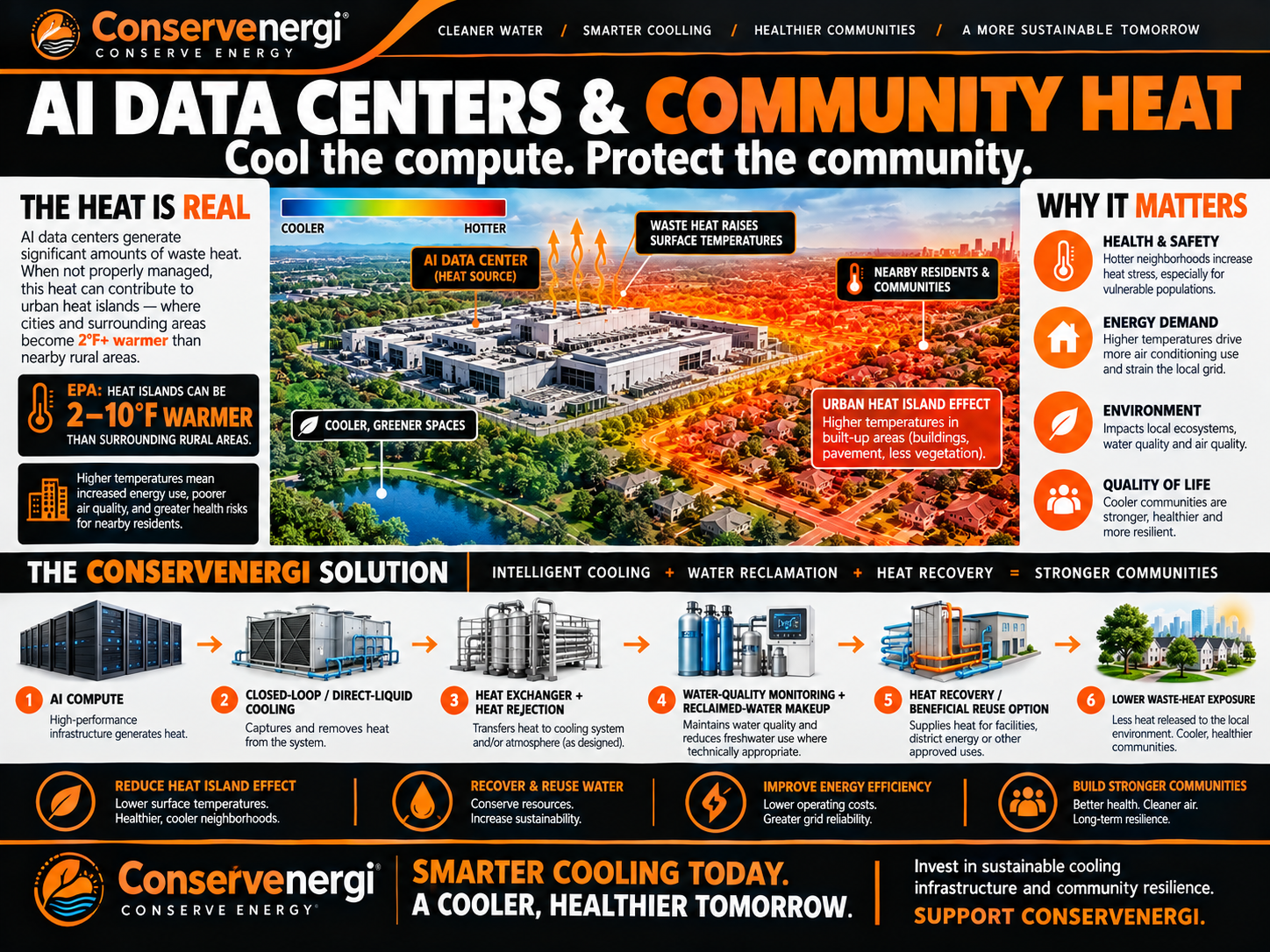
AI computing produces heat that cooling systems must remove. Where that heat goes matters: local conditions, equipment design and the method of heat rejection shape its effect on the surroundings. Urban heat islands have many causes, including pavement, buildings and limited vegetation; this graphic illustrates a concern, not a measured temperature increase attributable to any one data center.
Connect cooling with water stewardship
The graphic follows heat from computing equipment through closed-loop or direct-liquid cooling to heat exchange and rejection. Reclaimed water may reduce freshwater demand where water quality, treatment, equipment compatibility and local requirements allow its use. Tracking flow, temperature and water quality helps operators understand that pathway rather than assuming every cooling system has the same needs.
Recover heat where there is a useful destination
Heat recovery can serve nearby buildings or other suitable users when temperatures, demand and infrastructure align. It is not an automatic outcome of liquid cooling. Site-specific engineering and measured performance are needed to establish whether a project reduces energy use, water demand or local waste-heat exposure.
Make community outcomes measurable
Conservenergi’s message is simple: consider water, energy and community well-being together. AquaFlow supports the water side with facility-specific readings, trends and traceable operating records. Those records can inform decisions alongside engineering studies and environmental monitoring; they do not, on their own, demonstrate a reduction in neighborhood temperatures.